How Many Google Reviews Does Your Business Actually Need?
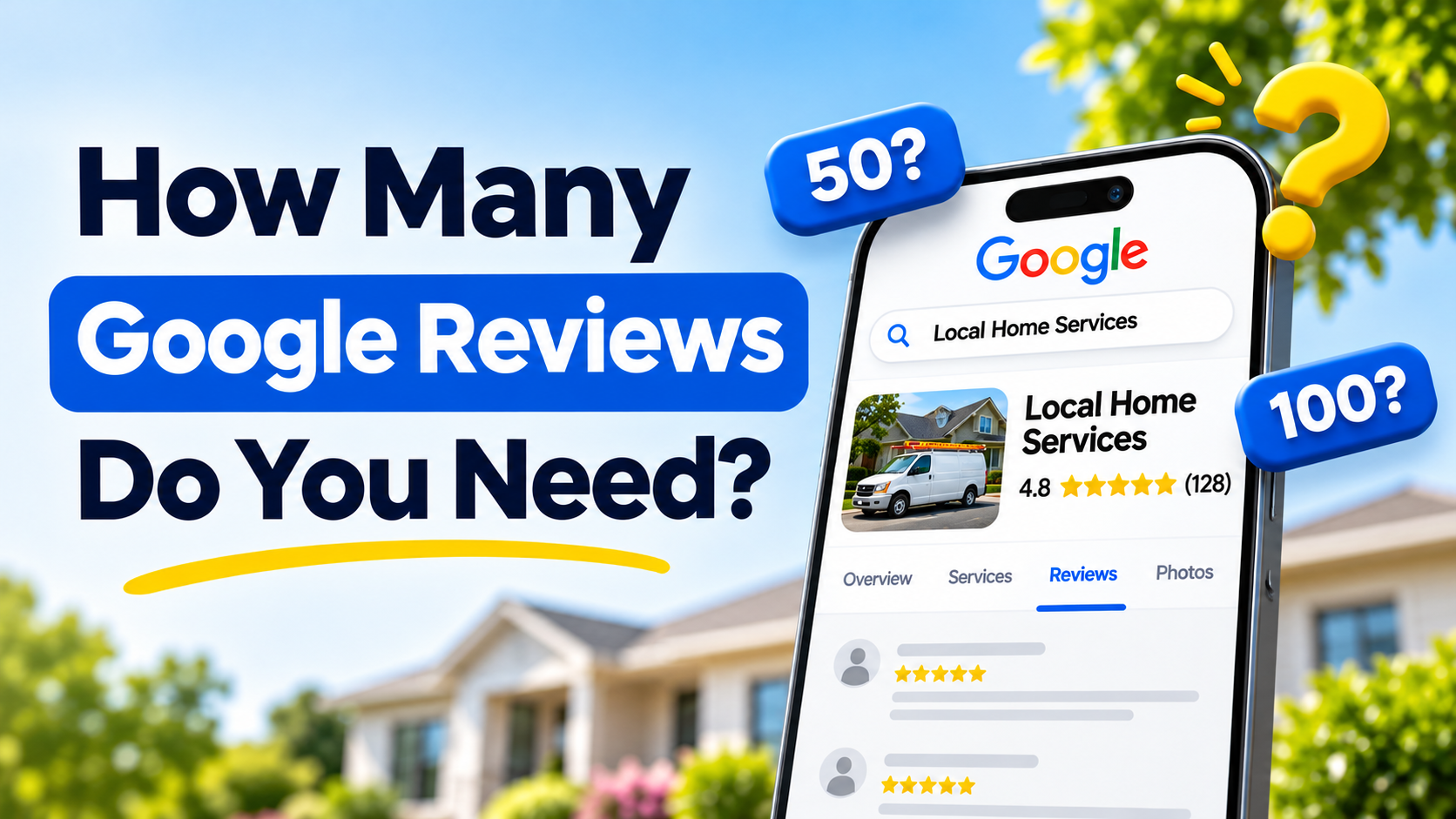
Your business needs enough genuine Google reviews to look credible alongside the businesses your customers are comparing. The right target depends on your local competition, your current reputation, and how many customers you serve.
Reaching 50 or 100 reviews can be a useful milestone. But those numbers alone do not tell you whether your business is competitive.
A plumber with 40 reviews might stand out in one town and look less established in another. To set a useful target, start with the businesses competing for the same customers.
There is no review count that guarantees a top Google ranking
Google says local results are mainly based on relevance, distance, and prominence. It also confirms that more reviews and positive ratings can help your local ranking.
Its published guidance does not give a review threshold that guarantees a particular position. That means getting your 100th review does not automatically put you ahead of every nearby competitor.
Your review count is one part of your visibility. Accurate business information, the services you offer, and the searcher's location also matter.
Source: Google Business Profile Help
Start with a local competitor check
Search for the services your customers would actually look for, such as “plumber in Bolton” or “roof repair near me.”
Choose five comparable businesses that appear prominently in the local results. Focus on companies offering similar services in the area you serve.
Record their:
- Total Google reviews.
- Overall star rating.
- Number of new reviews in the past 30 days.
- Most recent review date.
Search results vary by location, so treat this as a snapshot of your competition.
Here is a fictional example:
| Business | Google reviews | Star rating |
|---|---|---|
| Competitor A | 44 | 4.8 |
| Competitor B | 76 | 4.7 |
| Competitor C | 118 | 4.8 |
| Competitor D | 162 | 4.9 |
| Competitor E | 305 | 4.6 |
The middle review count is 118. That gives you a useful reference point without letting the largest company determine your entire goal.
If your business has 28 reviews, there is a noticeable volume gap. You can use that information to plan steady growth while also checking how your rating and customer feedback compare.
The competitor midpoint is a planning tool. It is not a Google requirement or a proven threshold for winning customers.
Set a realistic 90-day target
Once you understand the gap, work out what your customer volume can support.
A contractor completing eight projects a month has fewer opportunities to collect reviews than a service company completing 100 jobs. Their targets should reflect that difference.
Use this simple forecast:
For example, suppose you deliver requests to 40 customers each month and assume 15% leave a published review:
- 40 requests × 15% = 6 new reviews per month.
- Over three months, that would mean approximately 18 new reviews.
- Starting with 28 reviews, you would reach approximately 46.
The 15% figure is an illustrative assumption, not an industry benchmark or a promised result. Use your own results once you have enough data.
Your first 90-day goal could be to establish a reliable request process and test whether that pace is realistic. Review the numbers monthly and adjust your forecast.
Remember that competitors may be collecting new reviews too. Recheck their progress before setting your next target.
Look beyond the total number
Review volume helps you compare businesses, but read the reviews as a potential customer would.
What does the rating tell you? A growing collection of complaints needs attention. Fix recurring problems alongside improving your review process.
What do customers describe? Feedback about communication, workmanship, punctuality, and cleanup can help someone assess whether your business suits their job.
How recent is the feedback? Recent reviews give prospects examples of work you have completed lately. Check whether your listing reflects the customers you are serving today.
How does the business respond? Google recommends replying to reviews to show customers that their feedback matters. Professional, relevant responses also give you an opportunity to address concerns.
Source: Google's review guidance
You can use those questions to improve your own profile even before you reach your review-count target.
Make asking for reviews part of completing a job
A target becomes useful when you have a process behind it.
Choose a consistent point after completing the work to invite an honest review. Keep the request short and include a direct link so the customer can find the right place easily.
For example:
Hi Sarah, thanks for choosing [Business Name]. Would you be willing to share an honest Google review about your experience? Here's the link: [Review Link]. Thanks for your time.
Invite feedback consistently, including from customers whose experience was less positive. Google prohibits offering incentives for reviews and selectively asking only for positive reviews.
Source: Google Maps review policies
Track requests delivered and new reviews received. If requests are going out but few reviews appear, check the link, message, and timing before increasing the number of reminders.
Keep collecting reviews after reaching your milestone
Reaching 50, 100, or 200 reviews is a reason to recognize progress. Keep inviting feedback as you serve new customers.
A useful ongoing goal is to maintain a consistent process, learn from customer feedback, and reassess how your profile compares with local alternatives.
You can start this week:
- Record your current review count and rating.
- Compare five relevant local competitors.
- Estimate how many customers you can invite each month.
- Set a 90-day forecast using a clearly stated assumption.
- Review actual results every month.
That gives you a target tied to your business and a practical way to measure progress.
Make review collection easier with ReviewCatch
ReviewCatch sends personalized review requests by text and email, with follow-ups to help you collect feedback consistently while saving time.
Put a repeatable process behind your review goal.
Start Your 14-Day Free Trial With ReviewCatch
Automate your review requests, outshine local competitors, and build a steady stream of 5-star Google reviews on autopilot.
Start your 14-day free trial with ReviewCatch